The ‘Home First’ Philosophy

We have designed a responsive discharge pathway to help reduce delayed discharges in North London. We recognise that Delayed Transfer of Care (DTOC) often occurs simply because a safe package of personal care cannot be arranged quickly enough.

Our Proposed Service Model: Our service is being structured to accept urgent referrals from Hospital Discharge Teams and Social Workers across Barnet, Haringey, Islington, and Waltham Forest.

Our intended operational target is to assess, risk-manage, and deploy a care team within 24 to 48 hours. We aim to provide the immediate support required to get a person off the ward and into their own bed, reducing the risk of hospital-acquired infection.

Service Availability

Access to Services: To support our proposed 24-48 hour target, our staffing model includes provisions for a Dedicated Out-of-Hours protocol, including an On-Call Supervisor. This agile rostering is designed to enable us to absorb capacity and accept safe discharges even when the NHS is under pressure.

Partnerships: We aim to position ourselves as an integrated partner within the Multi-Disciplinary Team (MDT). We are establishing protocols to collaborate with Discharge Coordinators, OTs, Social Workers, and GPs to ensure the ‘discharge to assess’ process is seamless.

Reablement

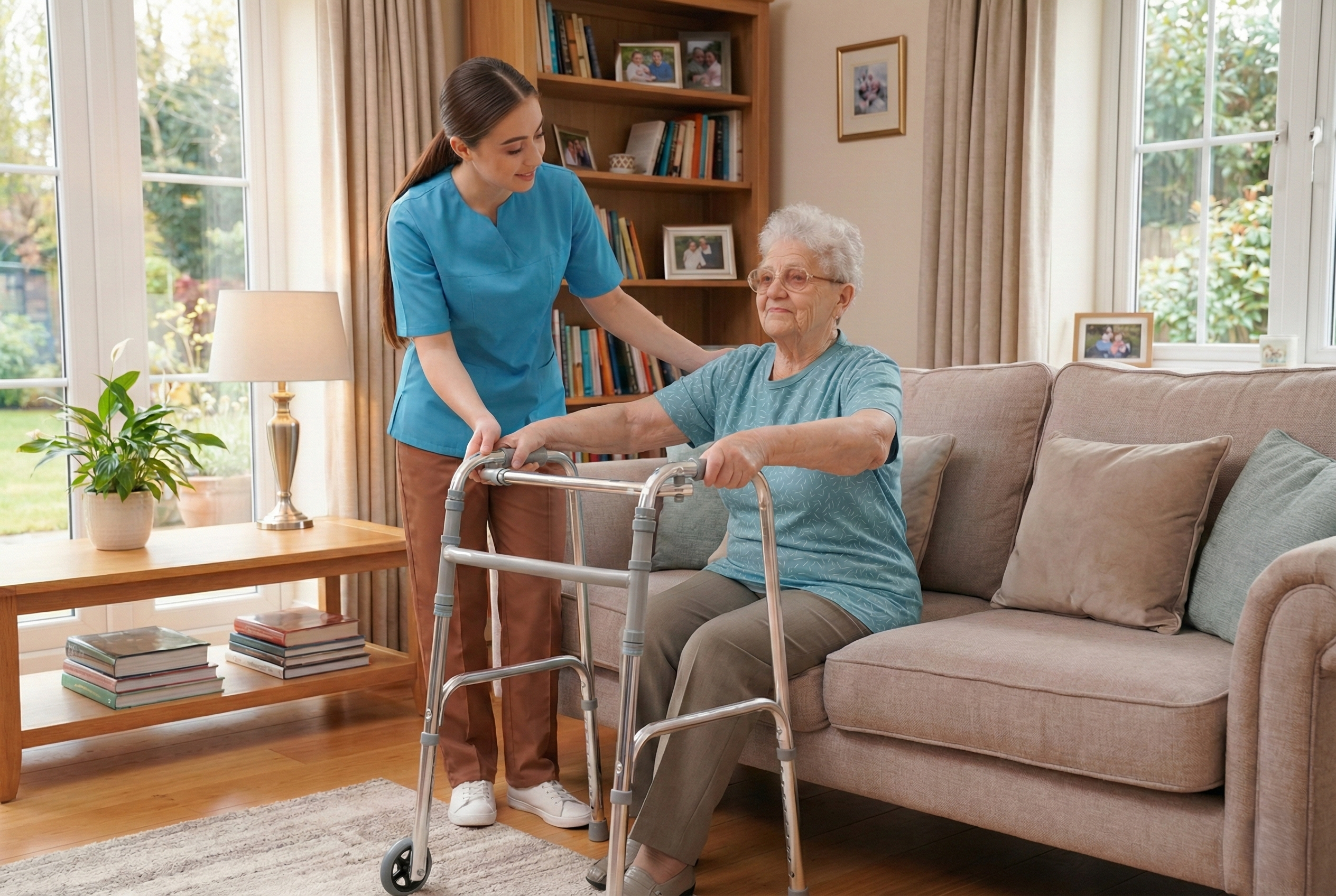
Our approach is based on working alongside Social Workers and OTs to deliver goal-oriented support. Whether the objective is ‘washing independently’ or ‘walking to the garden,’ our staff will be trained to stand back and encourage, rather than simply stepping in and taking over.

We prioritise psychological confidence as much as physical ability. We intend to measure our success not by how many hours of care we deliver, but by how quickly you no longer need us.

Proactive Wellbeing

The safest hospital admission is the one that never happens.

Early Intervention: Our induction curriculum is designed to place specific emphasis on spotting the ‘soft signs’ of deterioration (such as confusion caused by a UTI). Our protocol mandates the escalation of these signs to external clinical teams before they become 999 emergencies.

Carer Respite: If a primary family carer falls ill, our service model includes provisions for emergency deployment. This capacity is designed to stabilise the home environment and prevent the trauma of an avoidable A&E attendance.

Scroll to Top